



BMS Battery Management System (2S–5S)
Product details
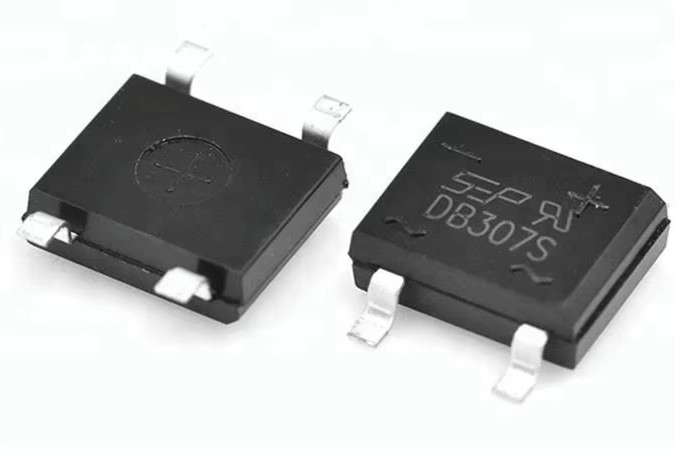
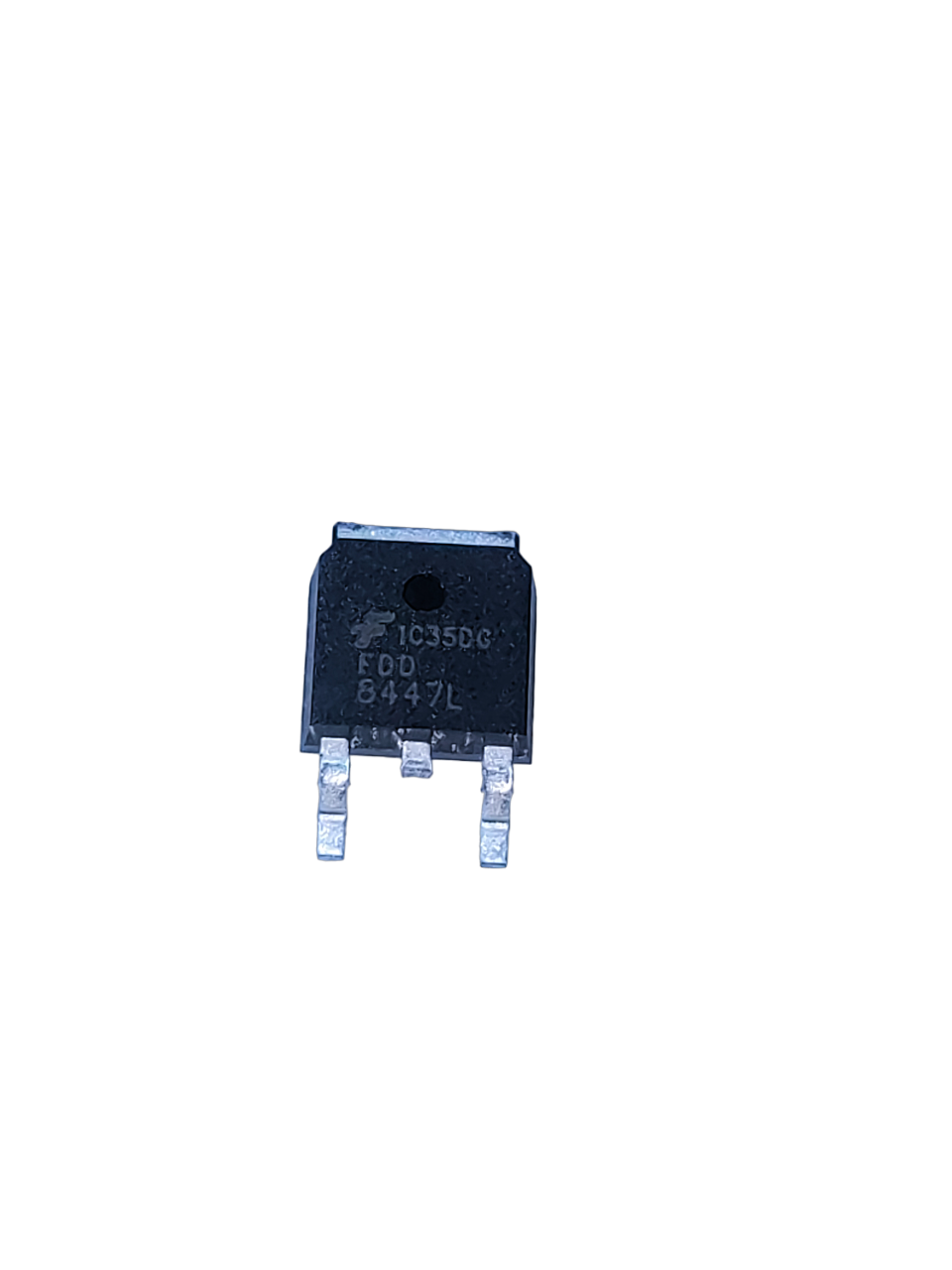
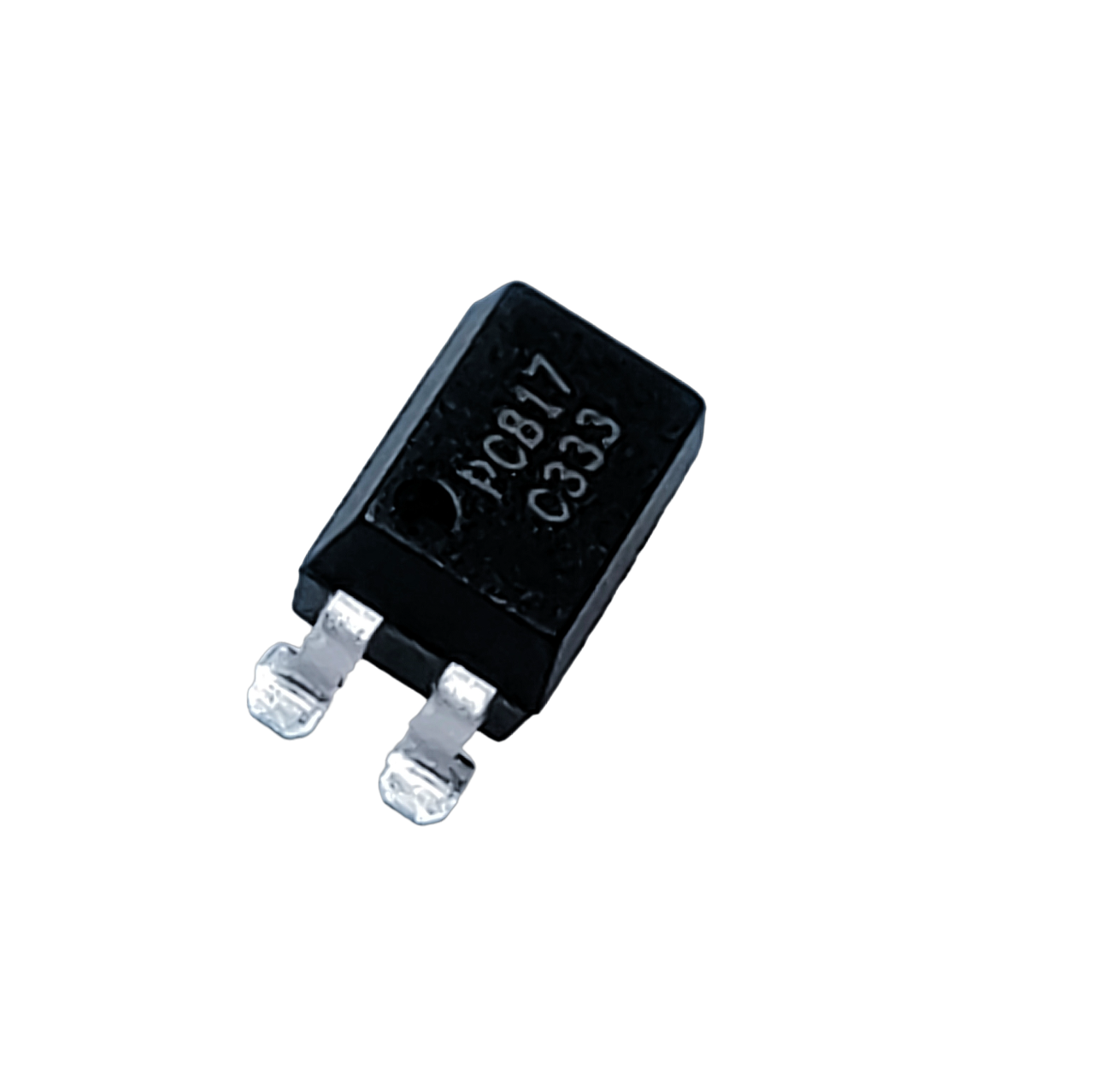
BMS
Battery Management System
Many different types of batteries are used in products ranging from mobile devices to electric vehicles. Regardless of application, batteries must be handled properly to prevent damage and potentially serious consequences of using a damaged battery.
Fortunately, balancing versions of the Battery Management System (BMS) provide an effective way to manage and protect battery packs. The BMS monitors battery voltage a temperature and ensures that charging and discharging take place within safe limits.Balancing versions are particularly useful in applications with multiple cells that may differ in capacity and charge level. The BMS equalizes cell voltages,helping to extend their service life.
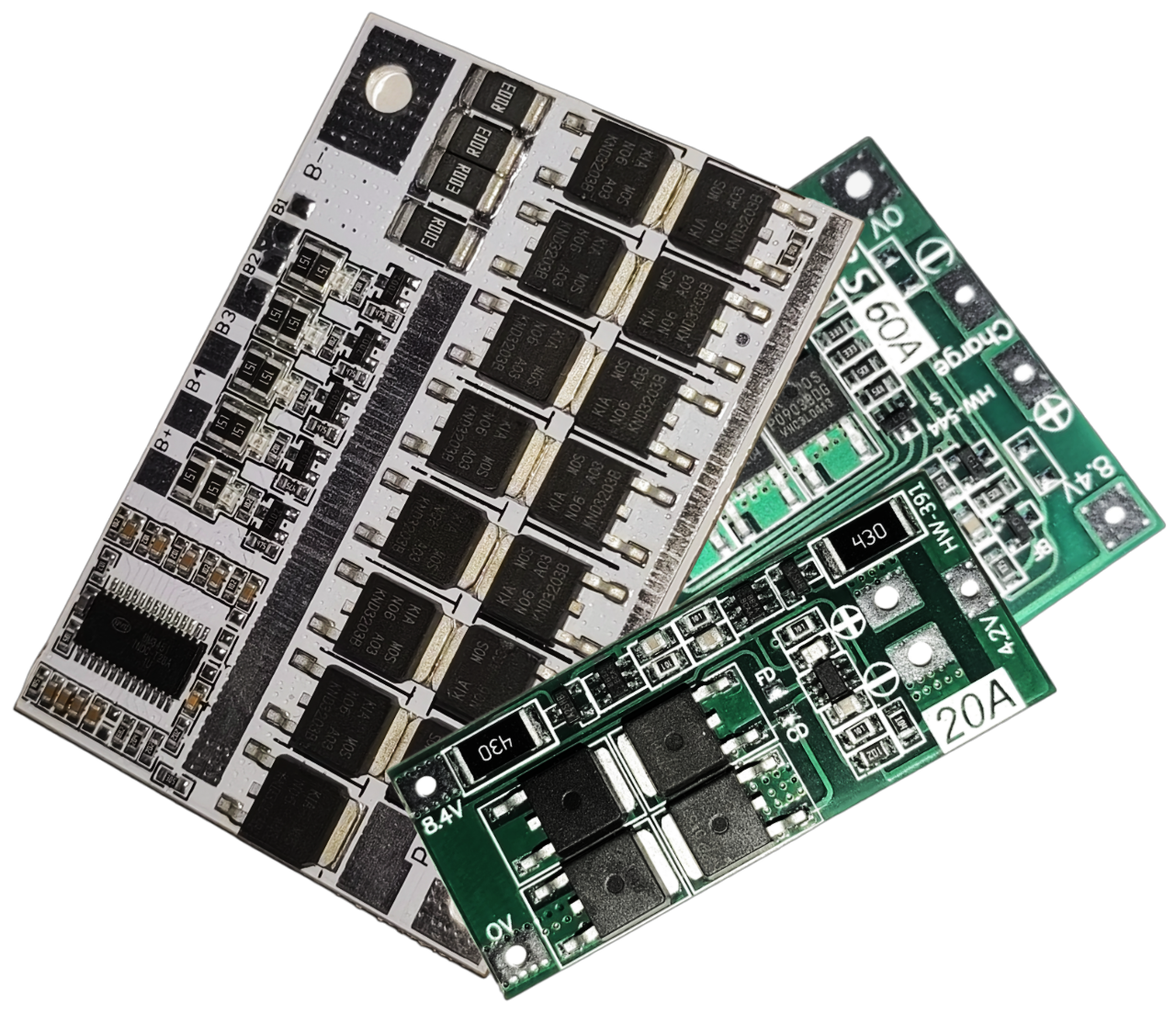
These are different types of BMS (Battery Management System) controllers for packs assembled from Li-ion or LiFePO4 cells. BMS boards have different specifications, including:
- maximum permitted load current in amperes (A)
- total battery voltage in volts (calculated from the number of cells and the voltage of each cell)
- protective functions
S The letter following the number indicates how many cells are connected in series.
- 2S 20A BMS –BMS for a pack with two LI-ION cells in series, with a maximum permitted load current of 20 A.
- 3S 12.6V 60A –BMS for a pack with three LI-ION cells in series; maximum permitted load current is 60 A and total pack voltage is 12.6 V.
- 4S 40A 16.8V –BMS for a pack with four LI-ION cells in series; maximum permitted load current is 40 A and total pack voltage is 16.8 V.
- 4S 100A 16.8V –BMS for a pack with four LI-ION cells in series; maximum permitted load current is 100 A and total pack voltage is 16.8 V.
- 4S 100A 14.6V –BMS for a pack with four LiFePO4 cells in series; maximum permitted load current is 100 A and total pack voltage is 14.6 V.
- 5S 100A 21V –BMS for a pack with five LI-ION cells in series; maximum permitted load current is 100 A and total pack voltage is 21 V.
- 5S 100A 18.25V –BMS for a pack with five LiFePO4 cells in series; maximum permitted load current is 18.25V.
Caution! ⚠️
It is very important to distinguish between nominal and fully charged cell voltage. For example:
-
Li-ion cells (18650, 21700, etc.):
-
Nominal voltage: 3,7 V
-
Fully charged (maximum) voltage: 4,2 V
-
-
LiFePO4 cells:
-
Nominal voltage: 3,2 V
-
Fully charged (maximum) voltage: 3,6–3,65 V
-
Always take the battery's fully charged voltage into account when selecting a suitable BMS!For example, if a battery contains four LiFePO4 cells in series, its maximum voltage will be 14,6 V (not 12.8 V, which is the nominal voltage).
WIRING EXAMPLES
2S 20A Li-ion – 8.4 V
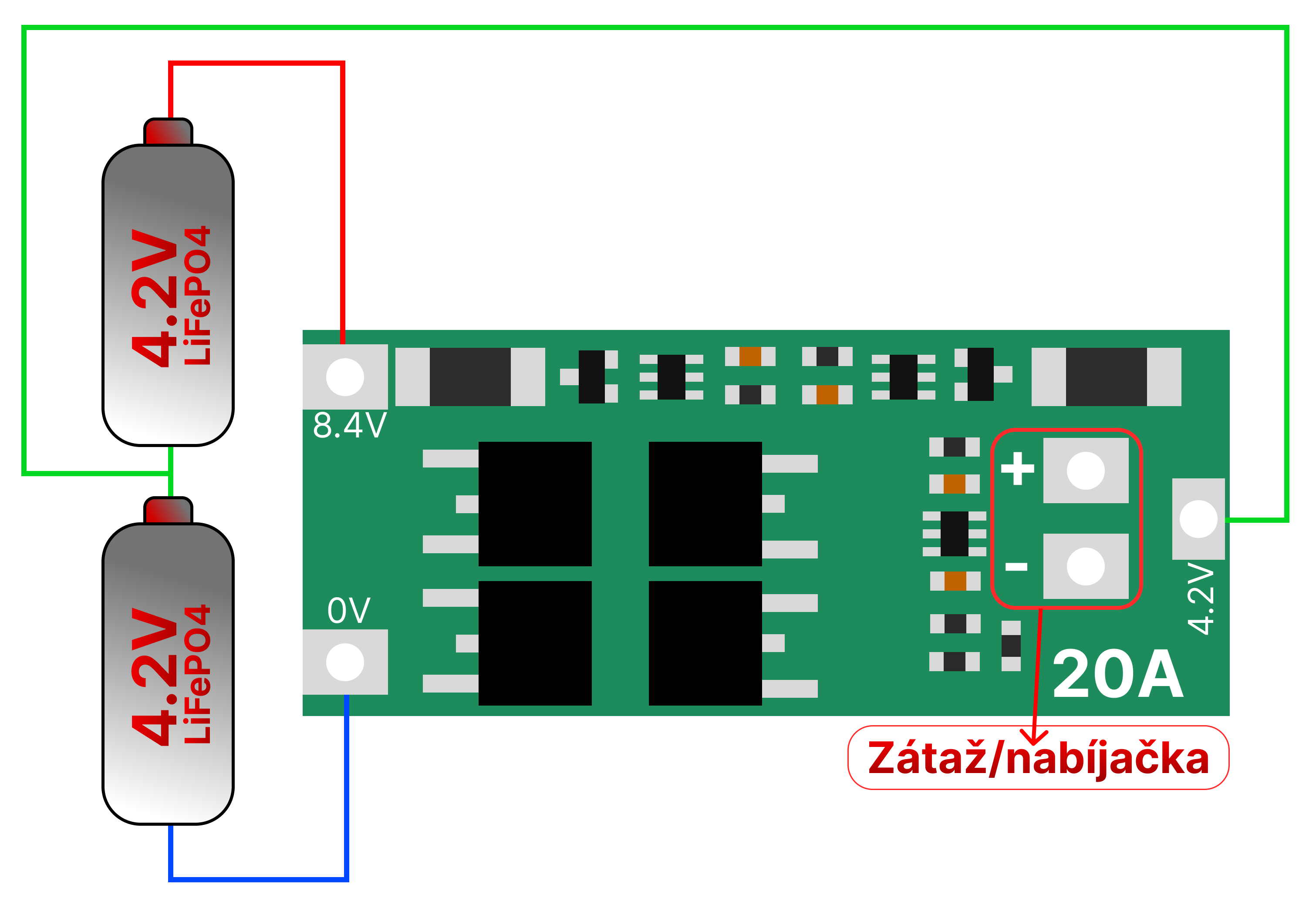
2S 10A LiFePO4 – 7.3 V 👇
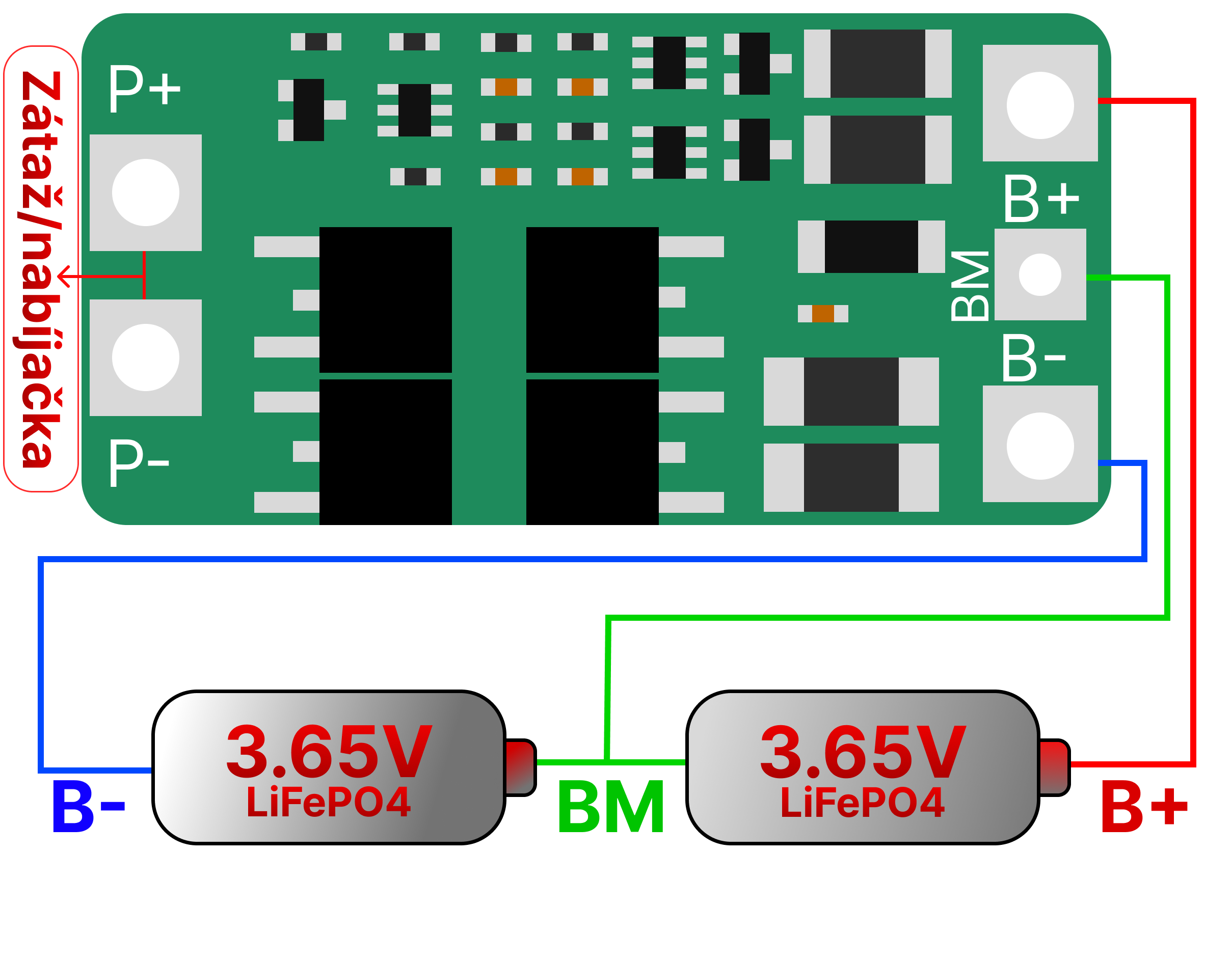
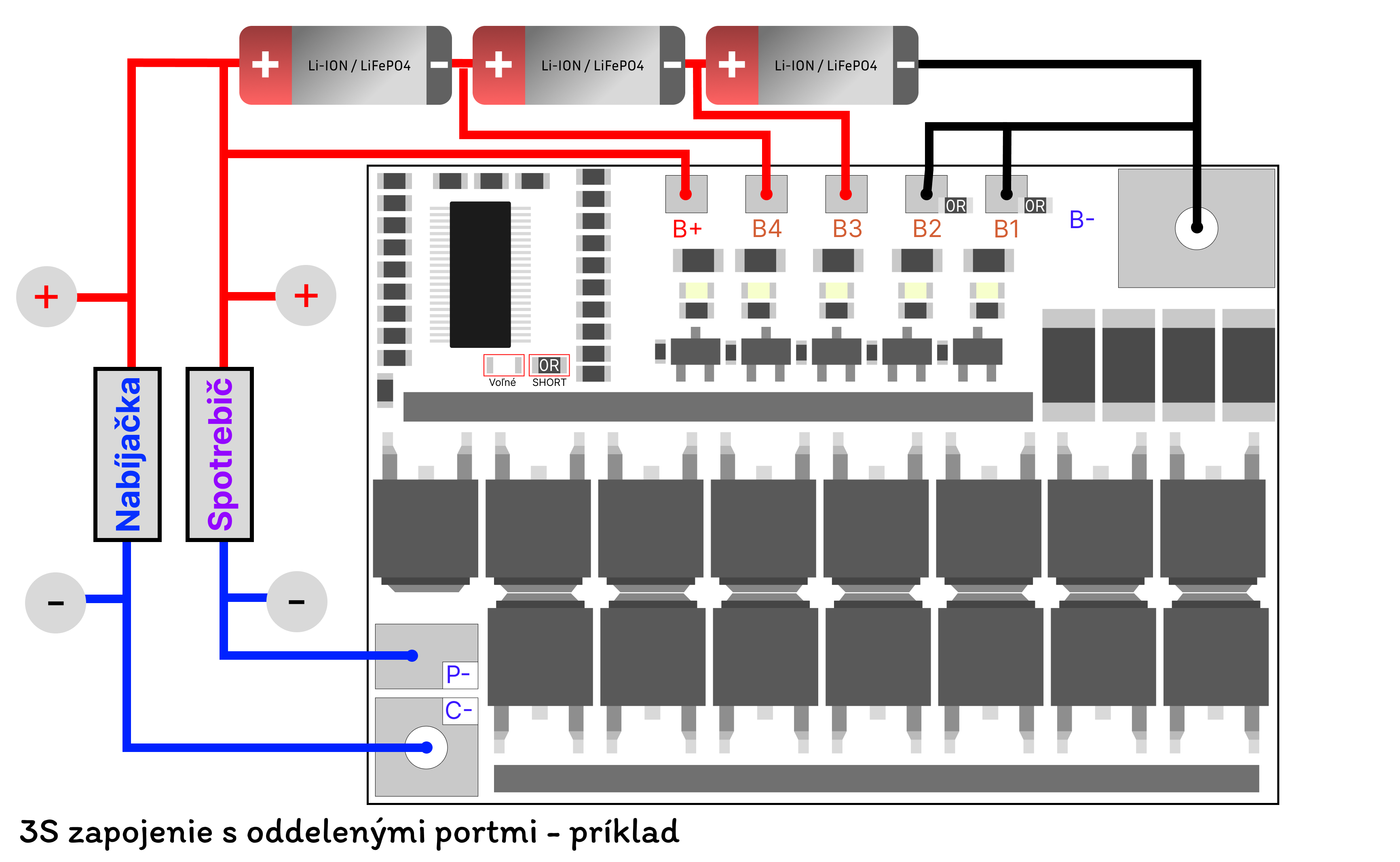
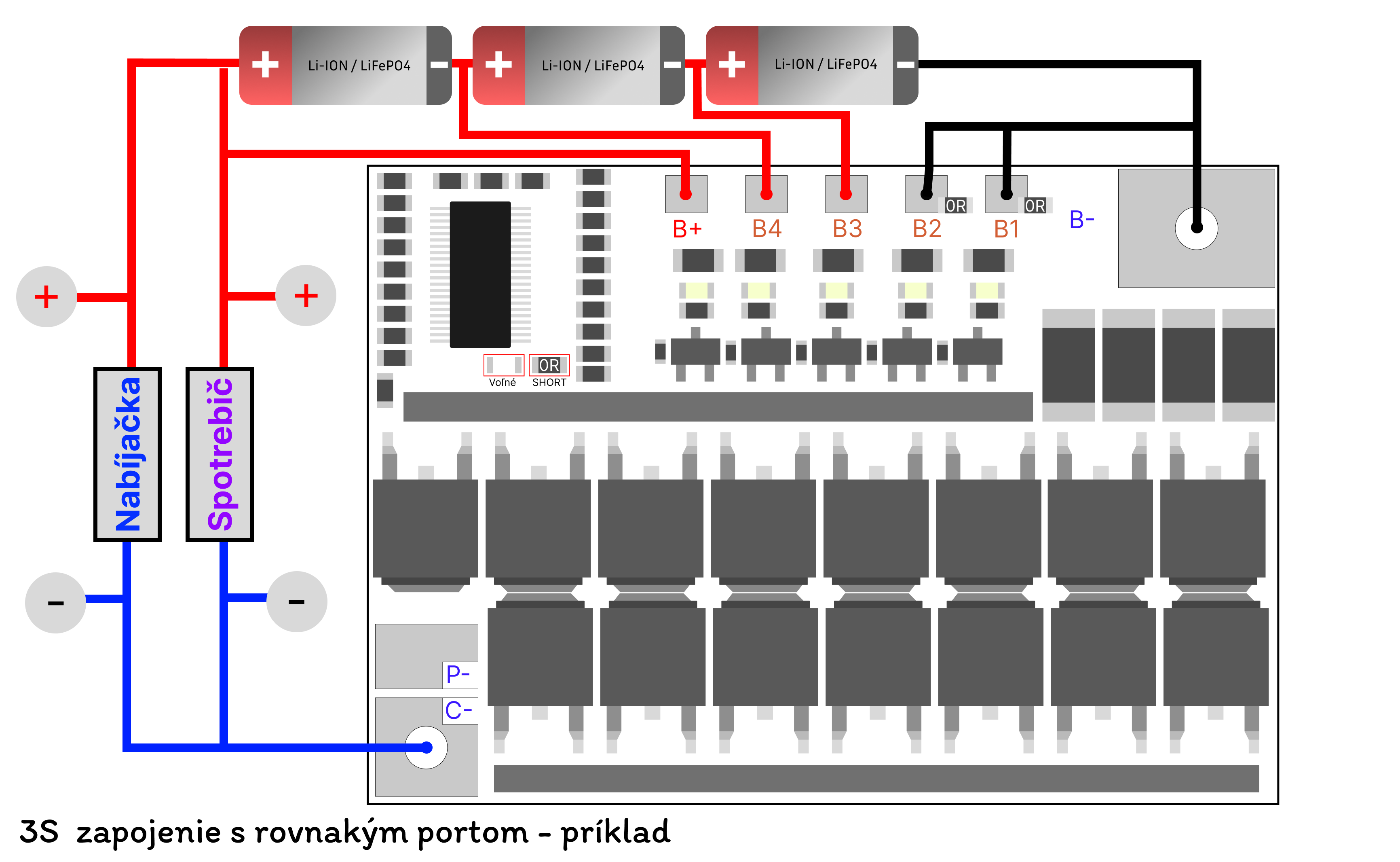
3S 100A Li-ion (12.6 V) / LiFePO4 (10.95 V)👇
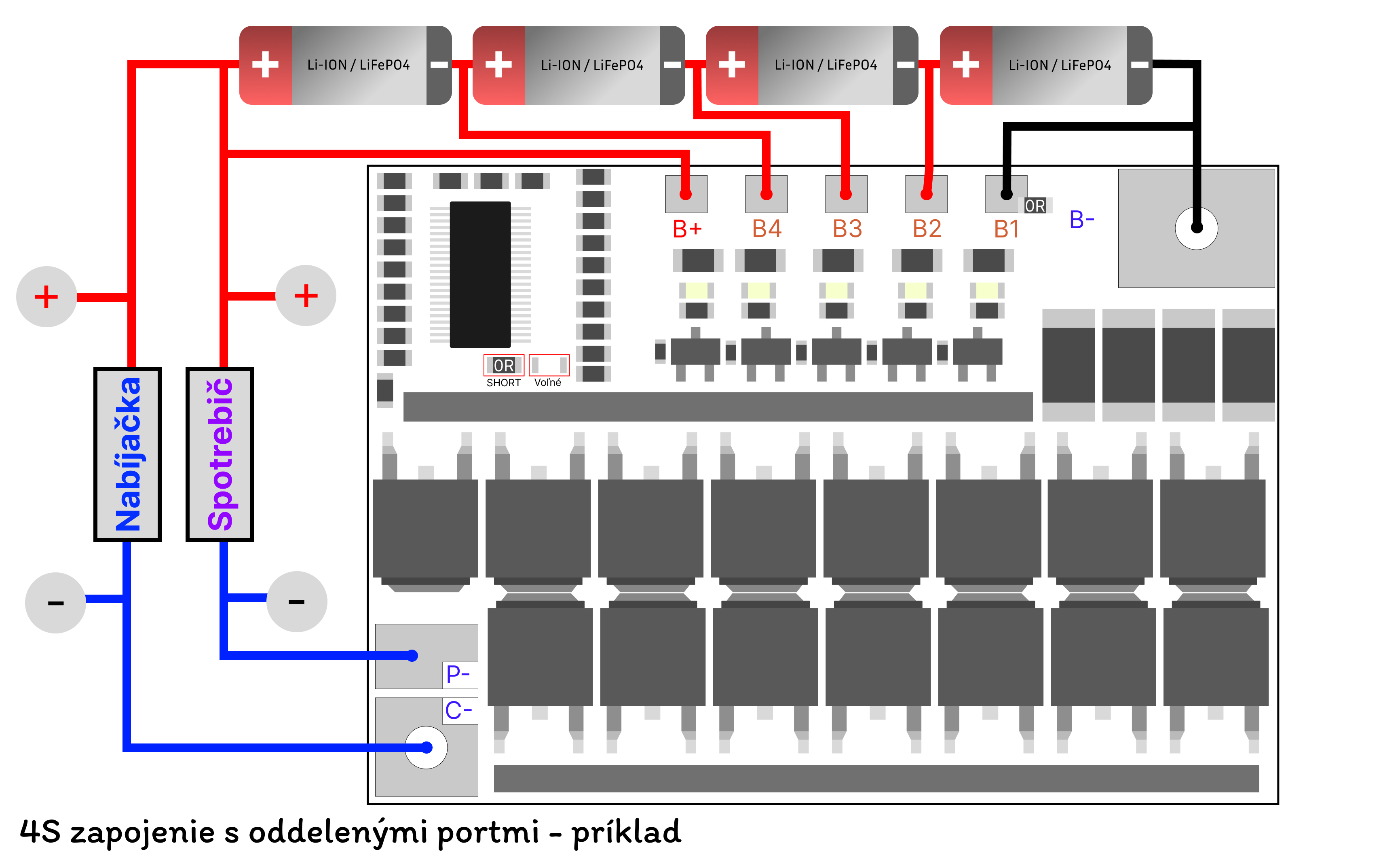
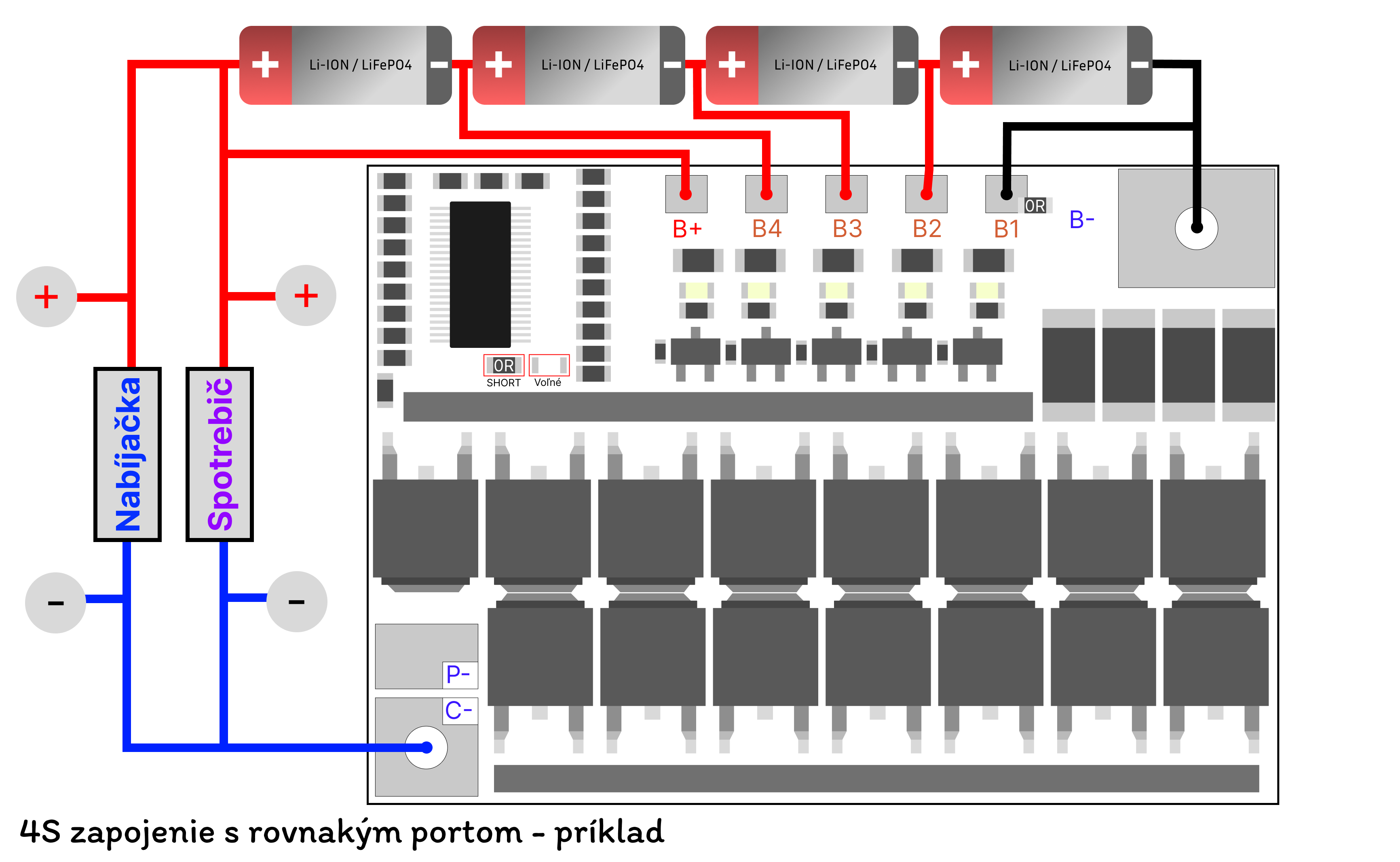
4S 100A Li-ion (16.8 V) / LiFePO4 (14.6 V)👇
5S 100A Li-ion (21 V) / LiFePO4 (18.25 V)👇
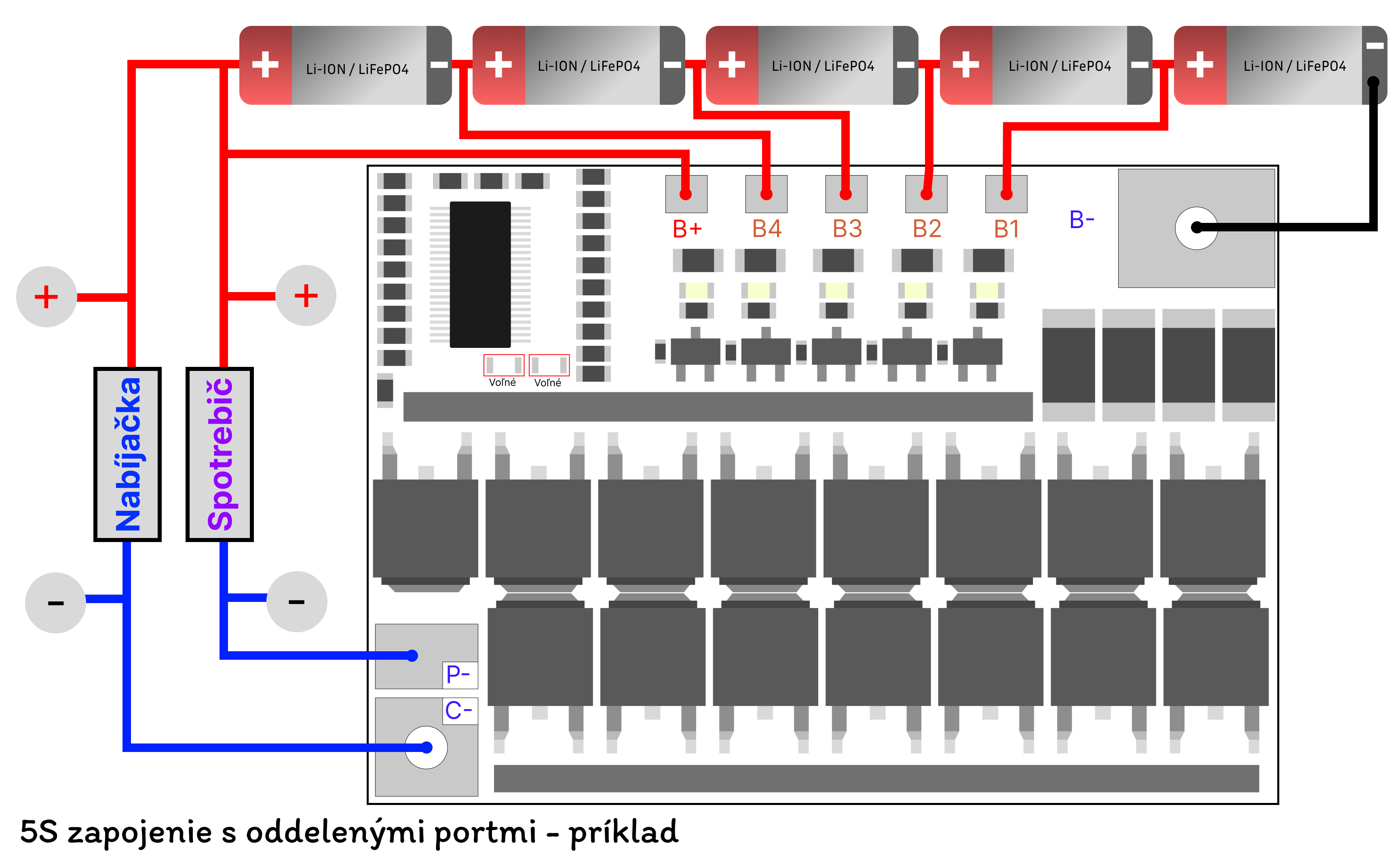
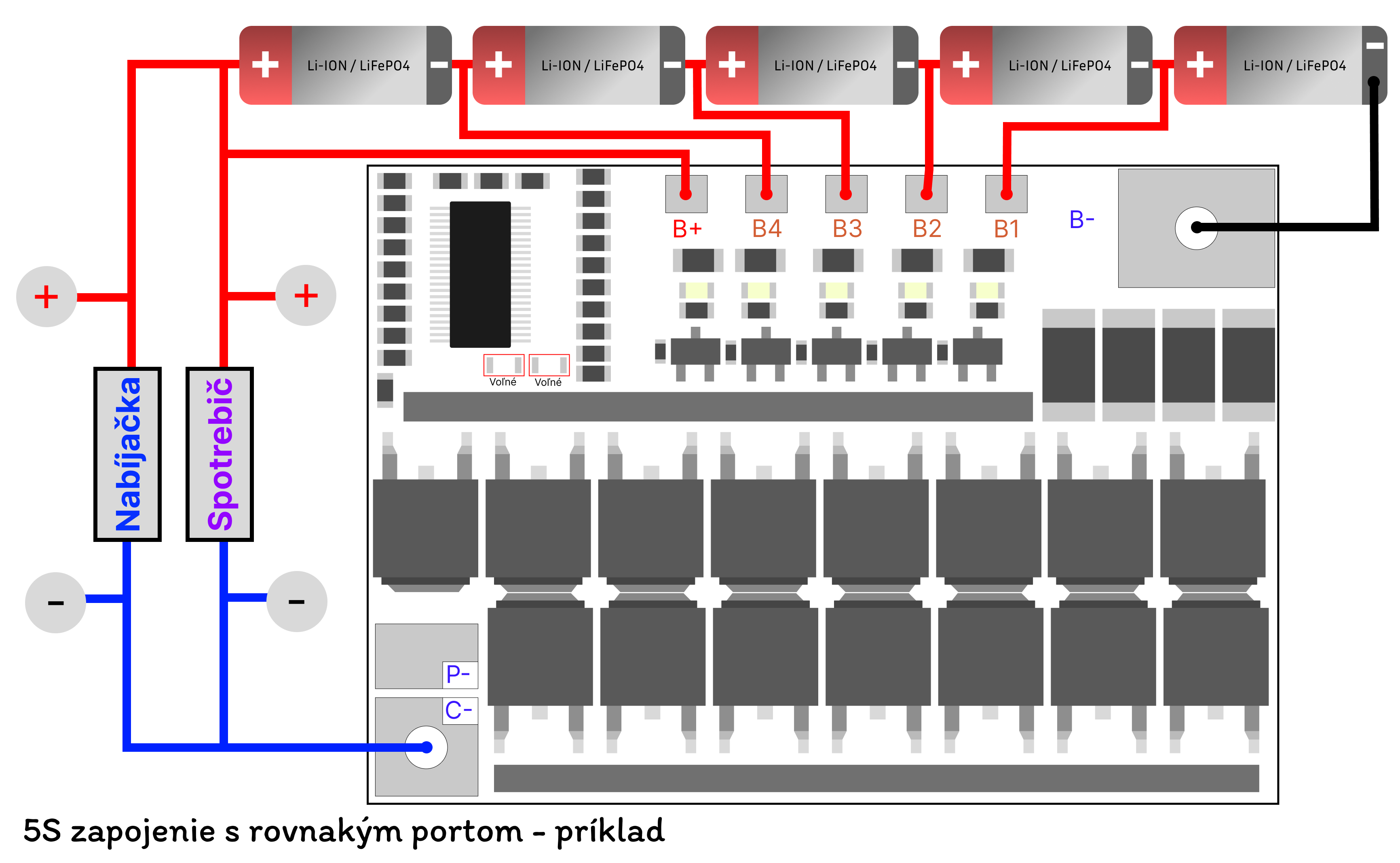
Four differences between separate-port and common-port connections:
🔌 Separate ports (separate-port connection)
- Charging (C−) and discharging (P−) use separate outputs.
- The charger connects to C− and the load (e.g., motor or lights) to P−.
- Advantage: less overheating, more reliable protection and improved current distribution.
- Disadvantage: more complicated wiring and more cables.
🔌 Common port (shared-port connection)
- Charging and discharging use the same port (P−/C− are combined).
- Both the charger and the load connect to the same output.
- Advantage: simple wiring with fewer leads.
- Disadvantage: higher load on one output, potentially more heating and less precise protection control.
Some possible applications for balancing versions include:
- Electric bicycles and scooters
- Electric drills
- Solar systems and other renewable-energy installations
- Power tools and garden equipment
- Electric vehicles such as scooters, motorcycles and cars
- Mobile phones, tablets and other portable devices
Reviews
No reviews yet.